
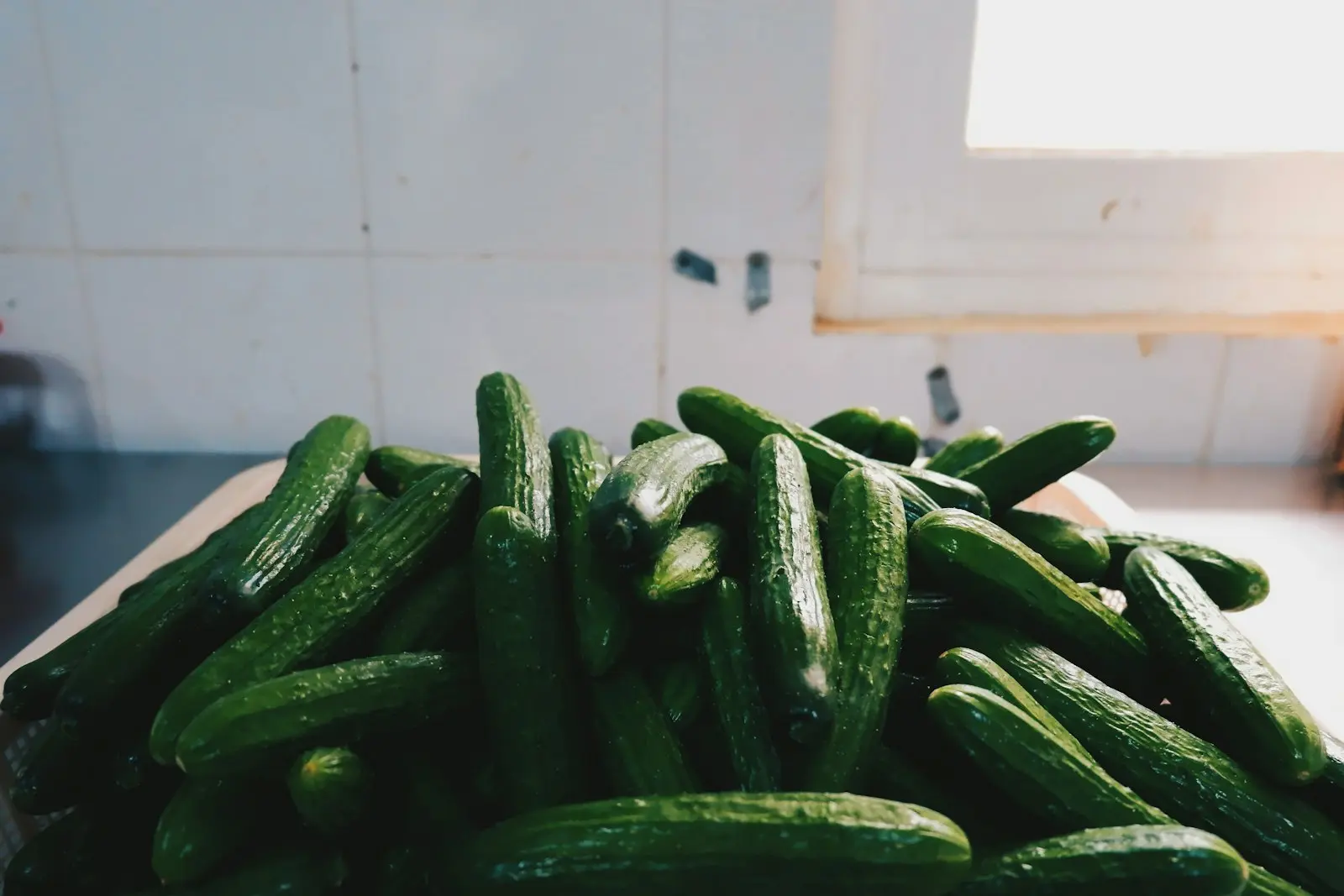
What Makes a Cucumber Bitter
Cucurbitacins protect the plant against pests, and they are normally concentrated in the foliage, not the fruit. University extension services agree that stress is the usual trigger for bitter fruit. Iowa State points to hot, dry weather, Nebraska and Alabama extension add wide temperature swings, uneven watering and low fertility, and pest or disease pressure can play a part too.
The Kratky Version of "Uneven Watering"
A Kratky cucumber never gets watered, so the stresses look slightly different:
- The container is almost empty. Near the end of the crop the plant has less and less to drink. Fruit picked at that stage is more likely to be bitter.
- Heat. A container in full afternoon sun, or a vine under a hot grow light, is stressed even with plenty of solution.
- Low fertility. A solution mixed too weak (see Kratky nutrients for cucumbers).
- Root damage. A plant with root rot is short of water however full the container is.
Saving a Bitter Harvest
Cucurbitacins concentrate at the stem end and just under the skin. Iowa State's advice is to cut off the stem end and peel the cucumber, which removes most of the bitterness. Taste a slice from the middle before you peel the whole batch.
A cucumber that is intensely bitter is a different matter. Nebraska Extension warns that eating very bitter cucurbits can cause severe stomach upset. If a cucumber is extremely bitter, don't eat it.
Preventing It Next Time
- Size the container so the plant doesn't run short before harvest: Kratky container size for cucumbers.
- Shade the container itself, not just the plant, in hot weather.
- Grow a variety bred to be low in cucurbitacin. Purdue lists 'Diva', 'Marketmore 76', 'County Fair' and burpless types among them. See best cucumber varieties for Kratky.