
From the blog
Succession Planting Cucumbers for a Longer Harvest
A Kratky cucumber crops hard for about a month and then it's done. Start the next vine at the right moment and you can pick cucumbers for months instead.
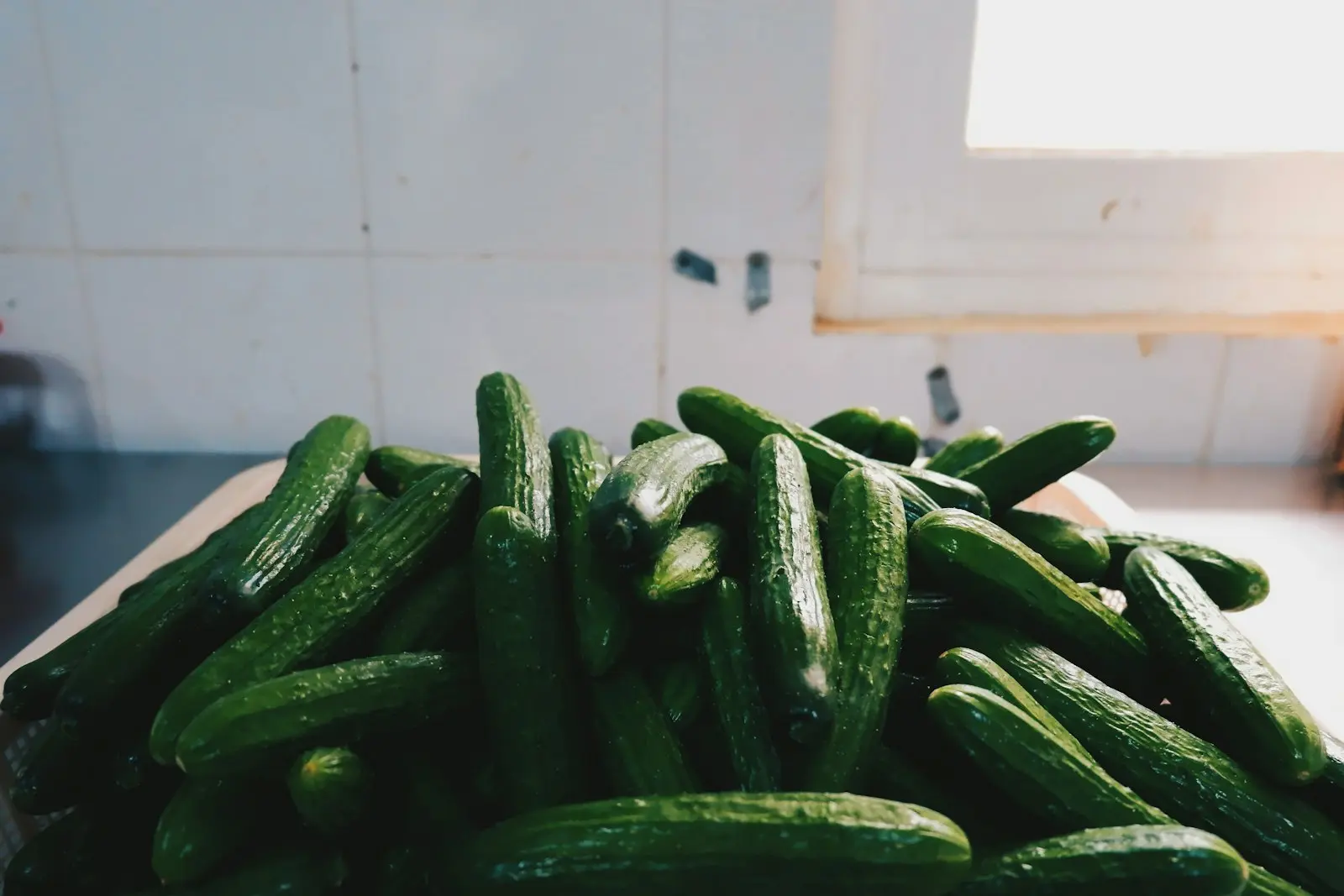
Succession planting cucumbers means starting new vines at intervals, so one is coming into fruit as another finishes. It suits the Kratky method perfectly, because each container is a self-contained crop with a fairly predictable life.
Why a Kratky vine needs a successor
Dr. Kratky's instructions put the first harvest at about 45 days from seeding, and the crop usually ends after about a month of harvesting, when the solution is used up or pests and disease build. His paper ends the crop when less than 10 percent of the solution remains, usually around 80 days. You don't refill and keep going: you start again with a fresh container. See Kratky cucumber top up for why.
When to start the next vine
Start the next seed about 3 to 4 weeks after the first, so its first fruit arrives about when the first vine is at the end of its harvest.
| Day | Container 1 | Container 2 |
|---|---|---|
| 0 | Sow | |
| About 25 | Vining | Sow |
| About 45 | First harvest | Vining |
| About 70 | Peak, winding down | First harvest |
| About 80 | Finished, empty and clean | Cropping |
The cleaned first container can then take vine number 3.
How many containers?
- Two containers in rotation give a fairly steady supply for a small household.
- Three give overlap, and room to lose one to pests without a gap.
Utah State University suggests 2 to 3 cucumber plants per person for fresh eating. For yields, see how many cucumbers per plant.
Starting the new vine
Sow straight into the lid of a filled container, or sprout the seed and move it in: how to germinate cucumber seeds for hydroponics. Use a fresh, clean container and fresh solution. Don't plant into the old container's leftover solution.
Ending the old crop
Kratky's instructions: empty the leftover solution onto bushes or trees in the yard, remove the root mass, wash the container and the growing tube, then start the next crop. A clean container also helps keep algae and root disease from carrying over.
Outdoors: watch the season
Outdoors, the last succession needs to finish before the weather turns cold. Count back about 80 days from your first autumn frost for the last sowing. Indoors under lights, you can rotate all year: Kratky cucumbers indoors. For spring timing, see when to plant cucumbers outdoors.
Mixing varieties in a succession
Each container is its own crop, so you can change variety as you go:
- Start with a quick-maturing bush or snack type for an early first harvest.
- Follow with a long vining slicer for the main season.
- Try a pickling type in a later container for a pickle batch.
See the best cucumber varieties for Kratky for options. Keep in mind that a seedless type near a seeded type that bees are visiting can get pollinated, and pollinated seedless fruit can be misshapen.
Keep notes
Write down for each container:
- The sowing date and the date of the first harvest.
- The date the solution ran low, and how much fruit came off.
- Any pest or disease problems.
After a season you'll know how long a crop really lasts in your conditions, and can tighten the gap between containers. In cool weather a vine lasts longer; in heat it finishes sooner, so the next one should go in earlier.
Space
Two containers side by side need room for two trellises. Place them so the older, taller vine doesn't shade the young one, usually with the younger plant on the sunnier side.
Sources
- Kratky, B.A. The Wheel Garden (includes growing hydroponic cucumbers in a plastic storage container). University of Hawaii CTAHR.
- Kratky, B.A. (2004). A suspended pot, non-circulating hydroponic method. Acta Horticulturae 648, 83–89. University of Hawaii CTAHR.
- Utah State University Extension: How to grow cucumbers in your garden
Questions
Succession Planting Cucumbers for a Longer Harvest: Questions
How often should I plant cucumbers for a continuous harvest?
For Kratky containers, start a new vine every 3 to 4 weeks. Each one crops for about a month, so the next is ready as the last winds down.
Can I reuse a Kratky cucumber container straight away?
Yes, once it's emptied and washed. Kratky's instructions pour the leftover solution on garden shrubs, remove the roots and wash the container before the next crop.